
Small Animal Therapy for Youth Mental Health
Innovative Paths to Healing
When people think about therapy, many imagine sitting in an office talking with a therapist. Would it surprise you to hear that therapy can also happen while holding a reptile? At The Buckeye Ranch, we provide opportunities for healing in many forms, including our Small Animal Therapy for youth mental health program.
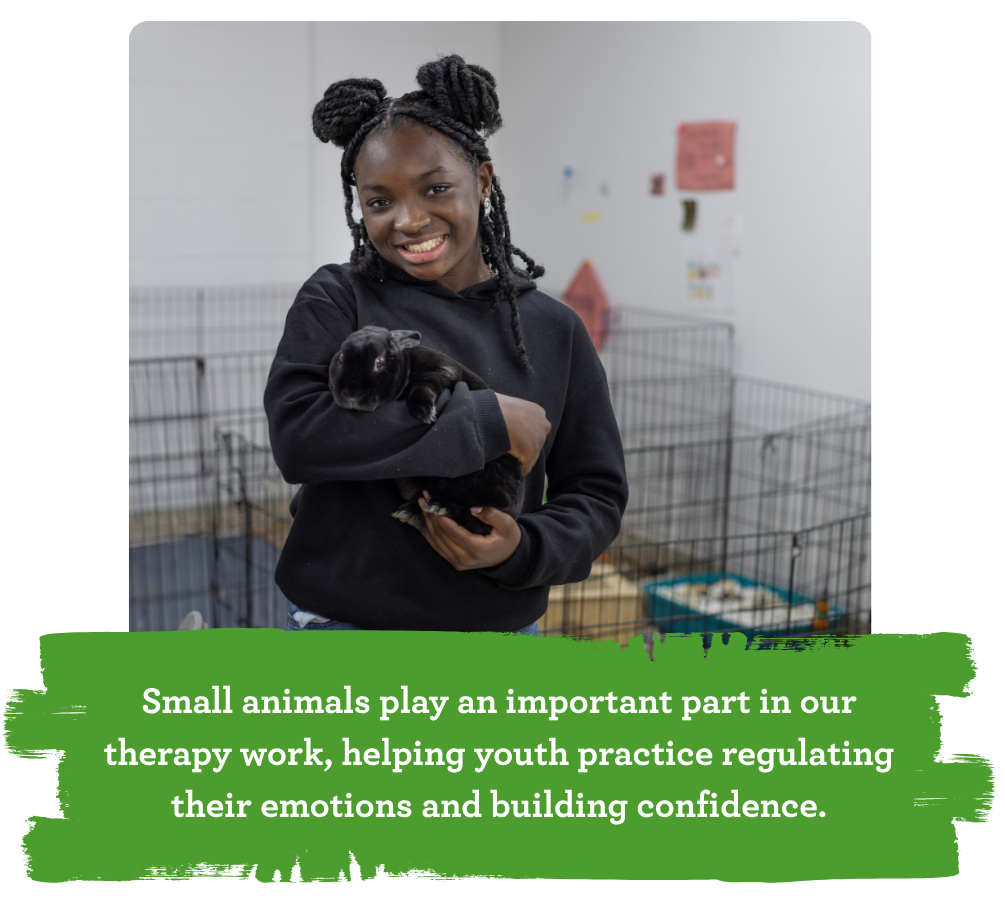
At our Residential Treatment campus in Grove City, youth have access to Small Animal Therapy for youth mental health, an innovative group therapy program that uses small animals as part of structured, therapeutic interventions. From rabbits and guinea pigs to parrots, turtles, geckos, and even ball pythons, these animals help youth build confidence, develop social skills, practice emotional regulation, and form meaningful connections.
Recently, Heather Syrus, Clinical Supervisor and overseer of the group therapy program at The Buckeye Ranch, shared the impact of the program during an interview on WOSU’s All Sides. Her insights highlighted how animals can play a powerful role in healing journeys of youth on campus.
What is Small Animal Therapy for Youth Mental Health?
The Buckeye Ranch’s Small Animal Therapy program is an innovative group therapy option within our Residential Treatment Services. Our on-site facility currently houses 15 animals including chinchillas, guinea pigs and rabbits along with less furry friends like geckos, turtles, parrots, a bearded dragon, and even snakes!
Youth from our two Residential Treatment programs, Qualified Residential Treatment Program (QRTP) and Psychiatric Residential Treatment Facility (PRTF), participate in structured, therapeutic activities with a variety of animals as part of their treatment.
Small Animal Therapy is much more than simply spending time with animals. Every interaction is intentionally designed to support therapeutic goals and help youth make connections between their experiences, emotions, and behaviors.
These structured experiences are tailored to individual needs, giving youth opportunities to build specific skills. As Heather explains, “Youth can use animals as a platform for intervention. We are guiding them and structuring that experience for them to get something specific out of it rather than purely engaging with the animals solely for regulation.”
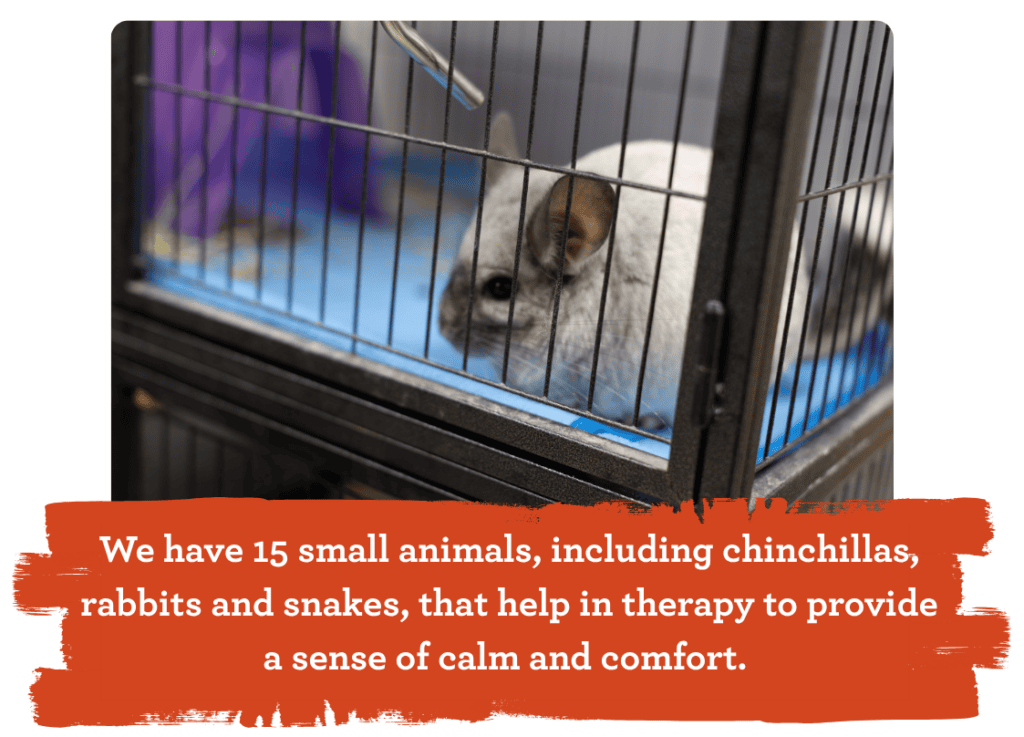
Youth from our two Residential Treatment programs, Qualified Residential Treatment Program (QRTP) and Psychiatric Residential Treatment Facility (PRTF), participate in structured, therapeutic activities with a variety of animals as part of their treatment.
Small Animal Therapy is much more than simply spending time with animals. Every interaction is intentionally designed to support therapeutic goals and help youth make connections between their experiences, emotions, and behaviors.
These structured experiences are tailored to individual needs, giving youth opportunities to build specific skills. As Heather explains, “Youth can use animals as a platform for intervention. We are guiding them and structuring that experience for them to get something specific out of it rather than purely engaging with the animals solely for regulation.”
Under the careful guidance of our clinicians, our small animals become a bridge for discussions about communication, trust, boundaries, self-awareness, and emotional regulation.
Why Small Animals?
The Buckeye Ranch’s Small Animal Therapy for youth mental health program has evolved over the years. Heather shared that the organization once featured an equestrian program and even cared for llamas, donkeys, and goats.
As the needs of the program evolved, the focus shifted to smaller animals. This shift allows the program to care for a wider variety of animals in a more sustainable way, leading to more opportunities for healing.
Meet the Animals
The Small Animal Therapy Program is home to a diverse group of animal residents, each offering unique avenues for learning and growth.
Some special friends in the program include:
- Monte, a Ball python
- Myrtle, a turtle
- Pancake, A bearded dragon
- Nora, a leopard gecko
- Pretty Girl, a parrot
- Comet, a chinchilla
- Shorty, a hamster
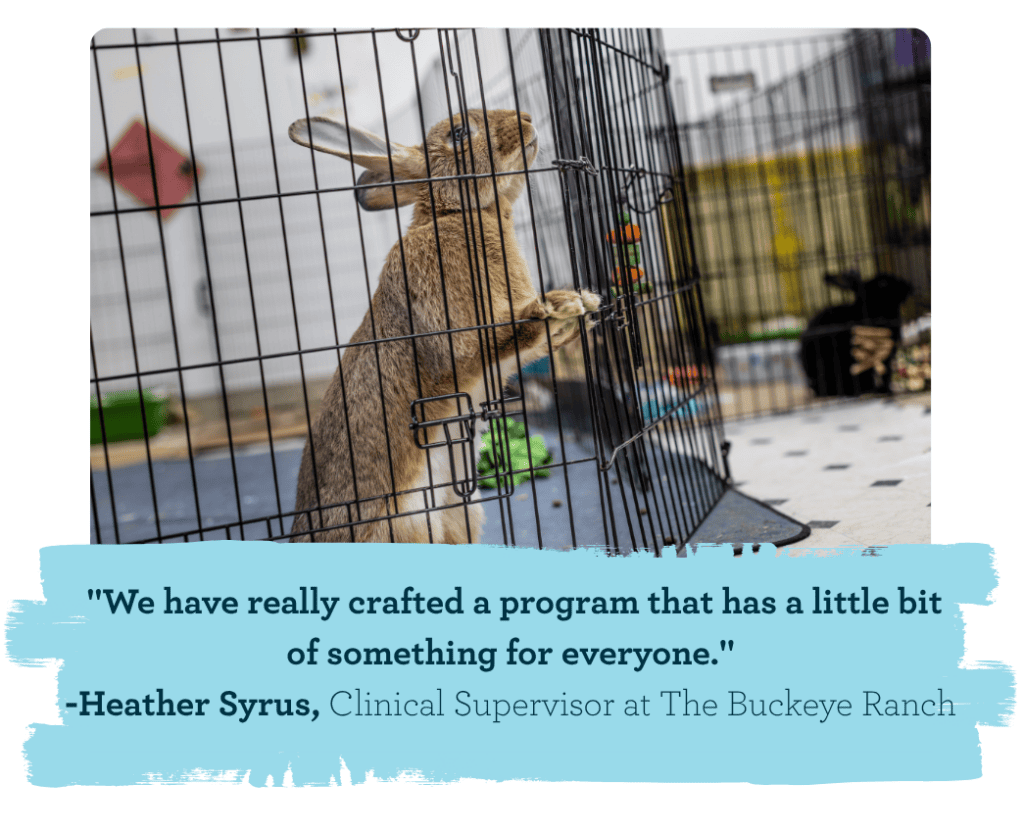
- Louis, a Flemish giant rabbit
- Along with many others!
The variety of animals is intentional. “We have really crafted a program that has a little bit of something for everyone,” said Heather. This diversity allows clinicians to match experiences to each youth’s needs, preferences, and treatment goals.”
The Surprising Power of Reptiles
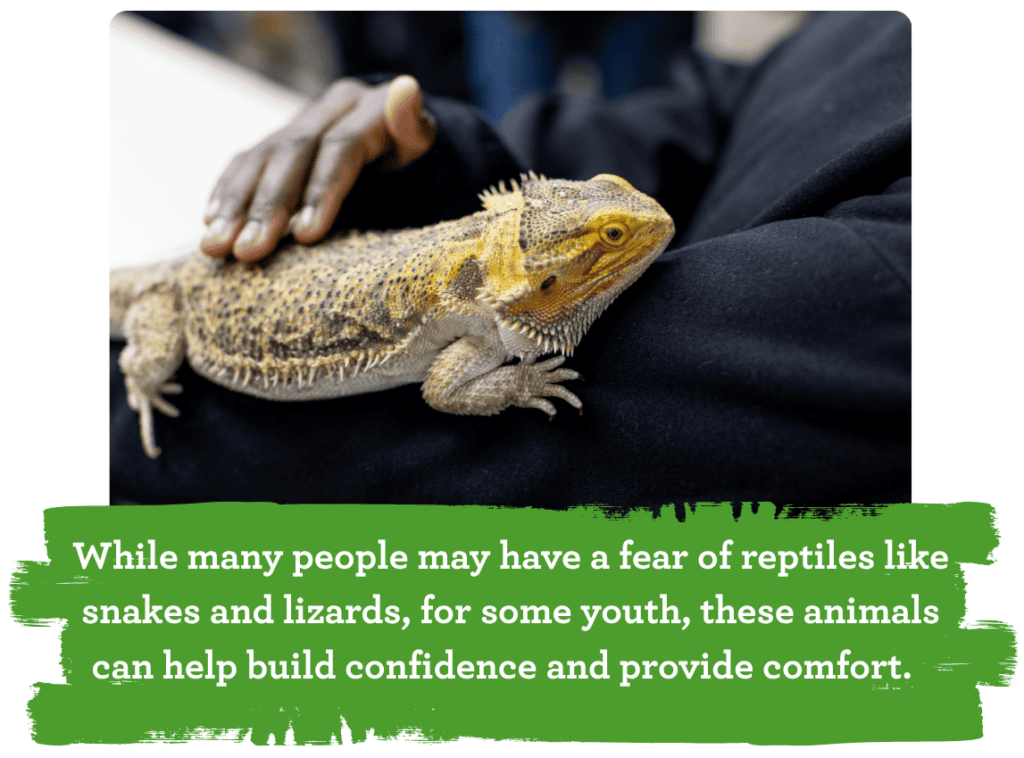
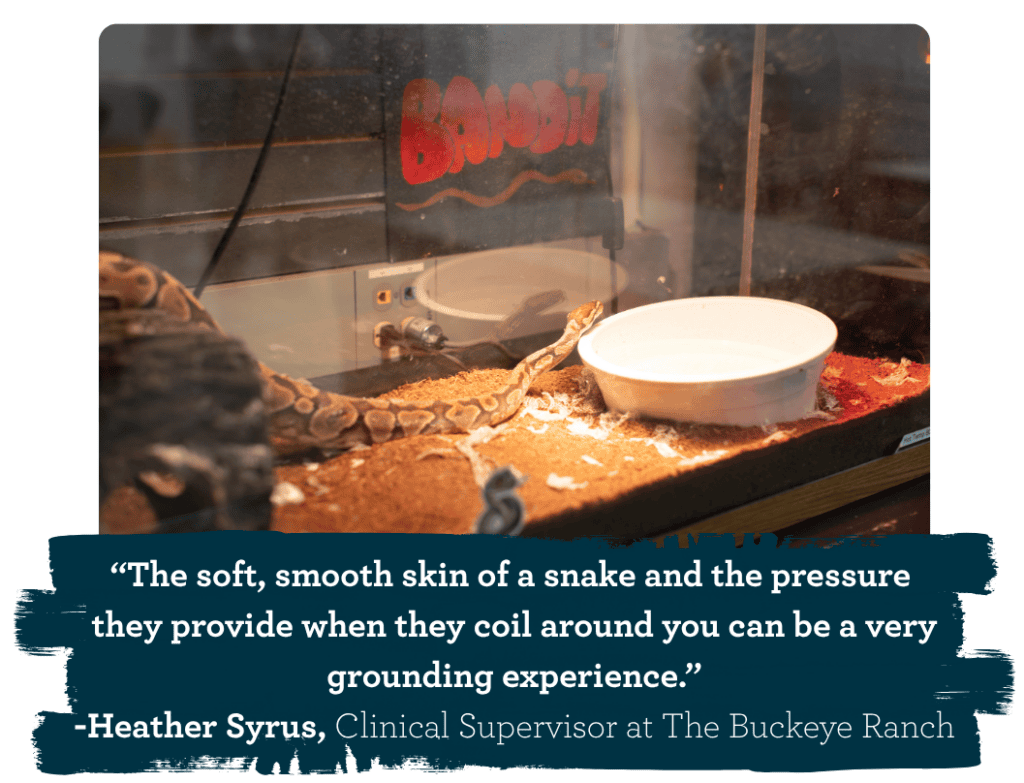
One of the most unique aspects of the program is its use of reptiles. For many people, snakes and lizards can be associated with fear. For some youth, however, reptiles become a source of comfort and confidence.
“We work with a lot of youth that have sensory needs,” Heather explained. “There are some kids who struggle with fur-based animals—the texture of fur, the smell, the dandruff. The soft, smooth skin of a snake and the pressure they provide when they coil around you can be a very grounding experience.”
For other youth, reptiles offer an opportunity to overcome fears in a safe and supportive environment.
“We’ll have kids who come in and are terrified to be around them,” Heather said. “But over time with small, controlled engagement periods, they’re able to realize that some of those fears are based on things they’ve heard and not necessarily reality.” These carefully guided interactions help youth build resilience, challenge assumptions, and develop confidence in their ability to manage discomfort and uncertainty.
Building Social Skills That Last a Lifetime
Small Animal Therapy for youth mental health can also help build social skills. Animals communicate without words, requiring youth to pay close attention to nonverbal cues. These observations often lead to conversations about how people communicate, how emotions are expressed, and how healthy relationships are built.
One of the program’s parrots, Pretty Girl, has become an especially valuable teacher.
According to Heather, the 40-year-old bird is less social and more territorial than the other animals, creating opportunities to discuss personal boundaries and body language. “That’s a really great example to be able to talk about boundaries and recognizing when someone has reached their limits,” Heather explained. “A lot of the things we’re working on with our kids are building up those social skills and their confidence to be able to engage with other people.”
Creating Deep Connections and Lasting Bonds
Because youth in Residential Treatment often stay on campus for several months, they can form lasting bonds with the animals they encounter.
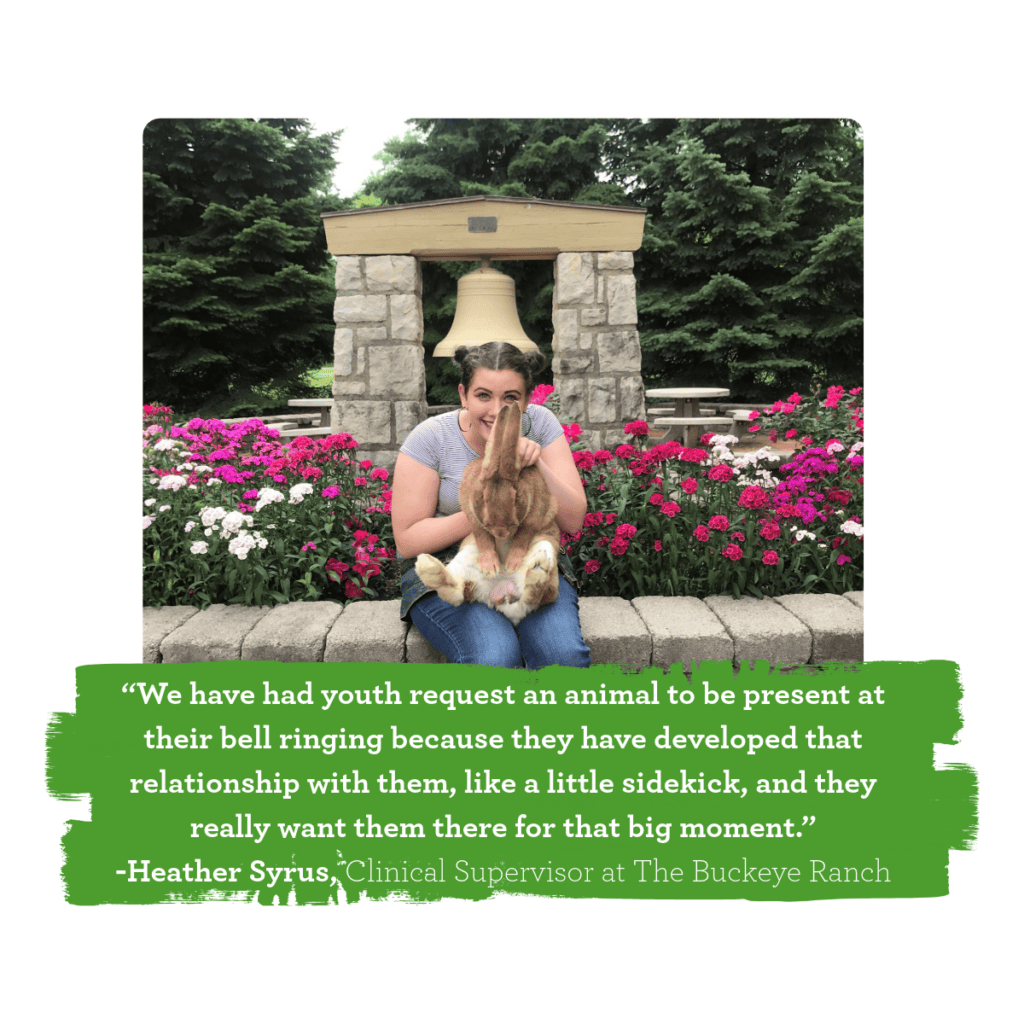
These relationships become an important part of their healing story. When youth complete Residential Mental Health treatment, they participate in a “bell ringing” ceremony to celebrate their progress.
“We have had youth request an animal to be present at their bell ringing because they have developed that relationship with them, like a little sidekick, and they really want them there for that big moment,” shared Heather.
Some former clients even return years later as team members and immediately recognize animals they once connected with during treatment. “Seeing people come back and say, ‘Oh my gosh, you’re still here, ‘that connection is really beautiful to witness,” Heather said.
Raising Hope Through Innovative Care
Every healing journey looks different and is composed of many moments and experiences that create change. Through Small Animal Therapy for youth mental health, healing can happen while sitting quietly with a leopard gecko or learning to read a parrot’s body language. It can even include celebrating a major milestone alongside a favorite rabbit.
The Small Animal Therapy program is only one example of innovative, evidence-informed treatment at The Buckeye Ranch that meets youth where they are and helps them discover their strengths, build meaningful connections, and move toward a brighter future.
To learn more about Residential Treatment Services at The Buckeye Ranch, click here. If you’re interested in supporting our evidence-based, trauma treatments like the Small Animal Therapy program, reach out to The Buckeye Ranch’s Development team at development@buckeyeranch.org or call 614-729-9673


